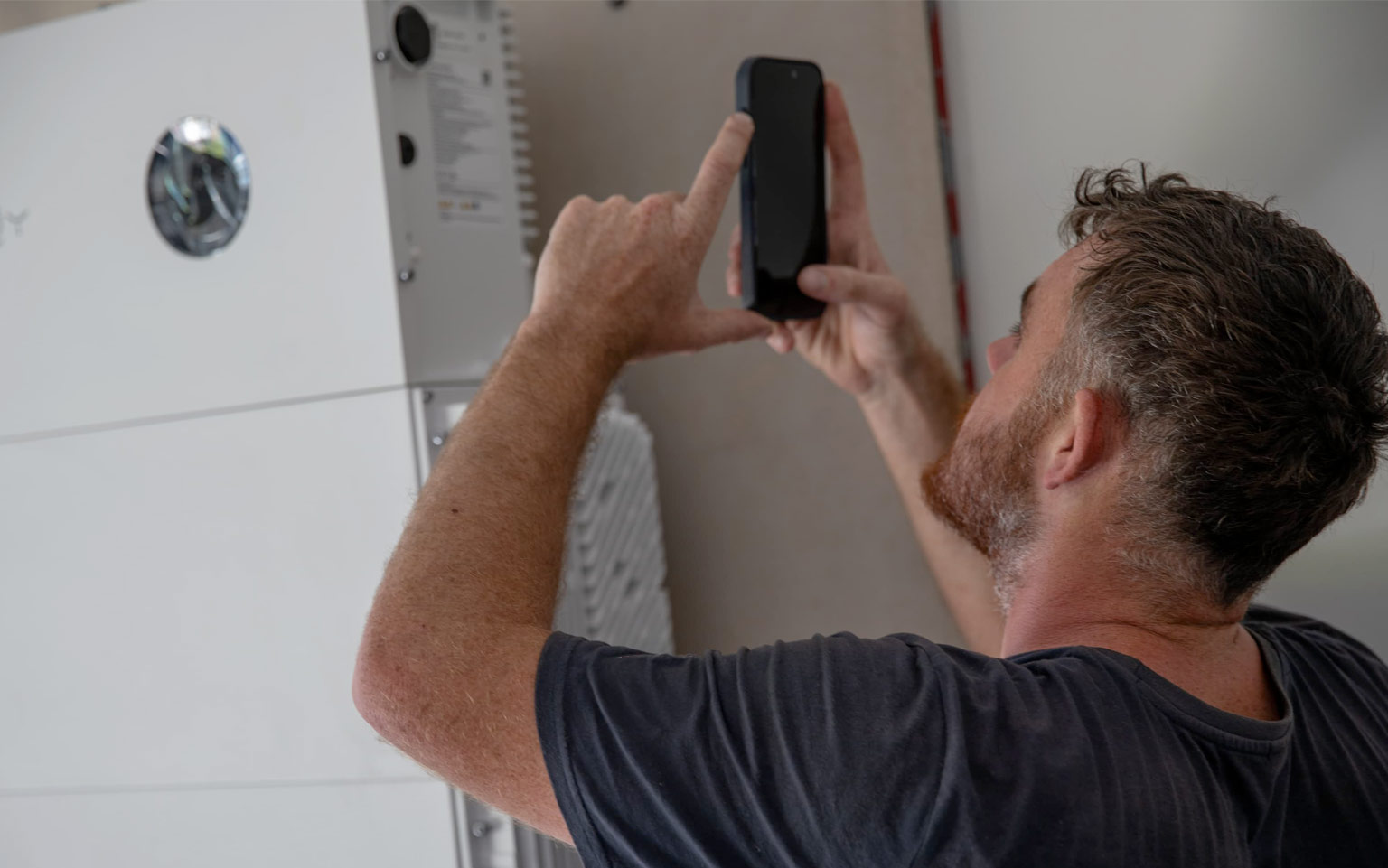
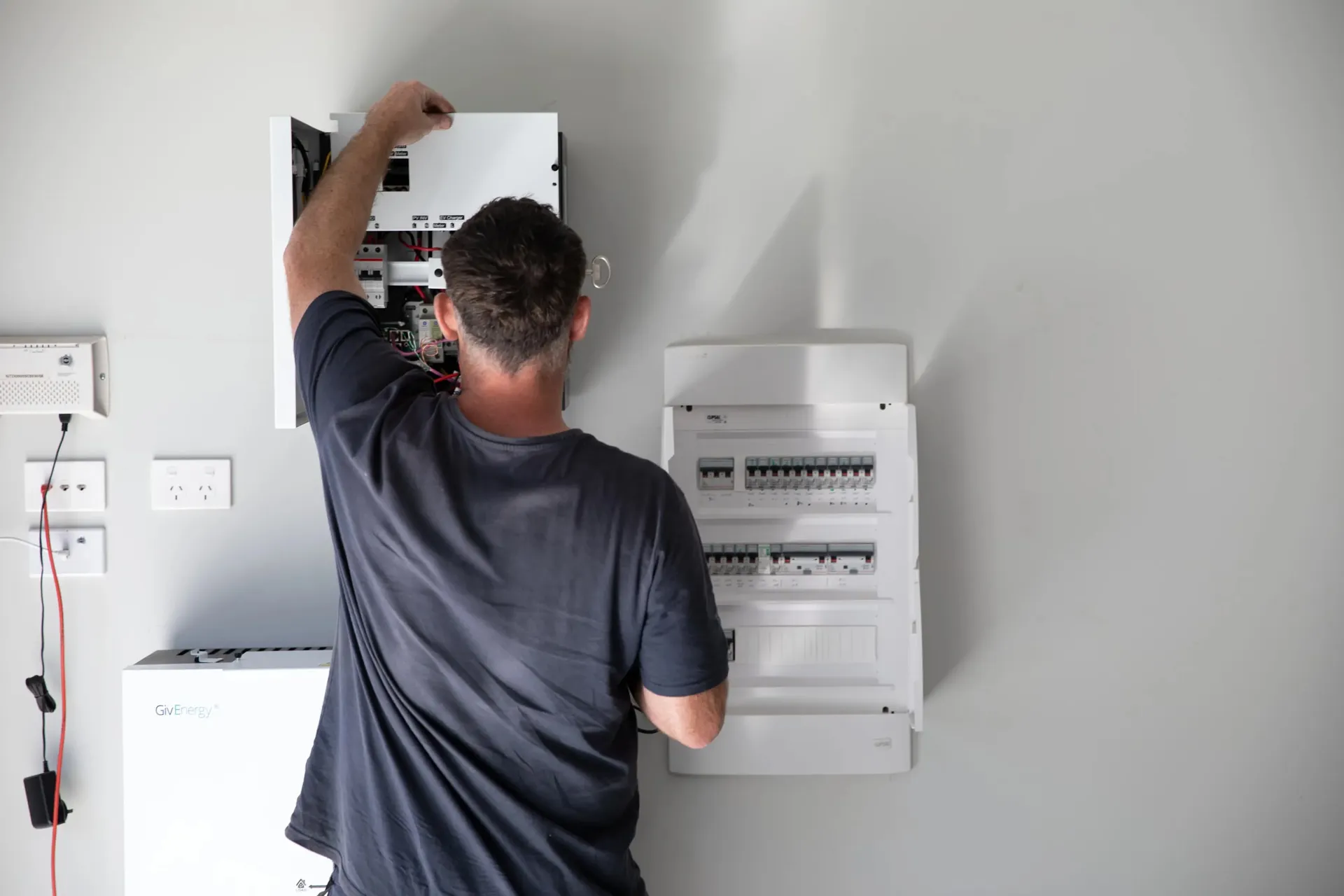
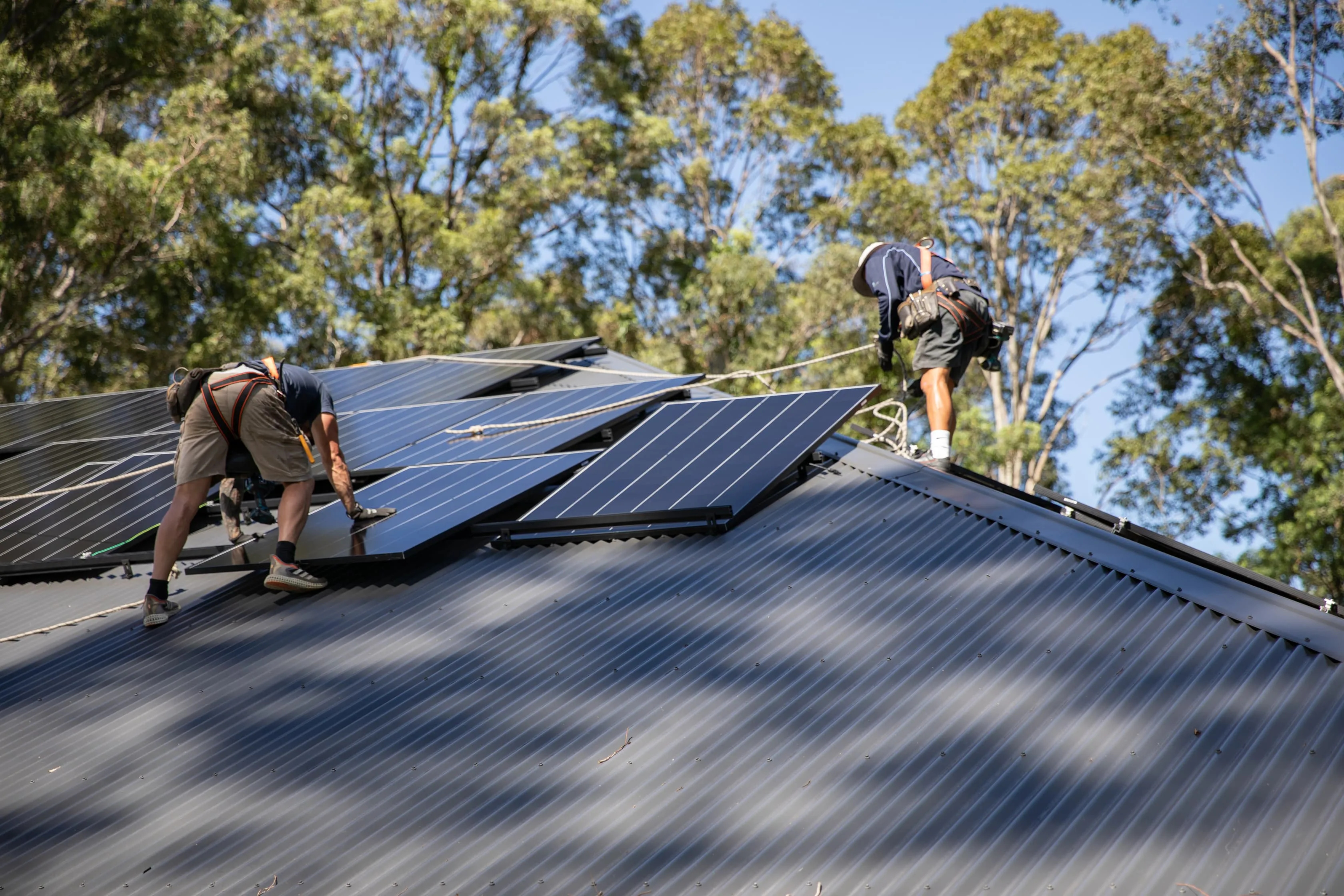
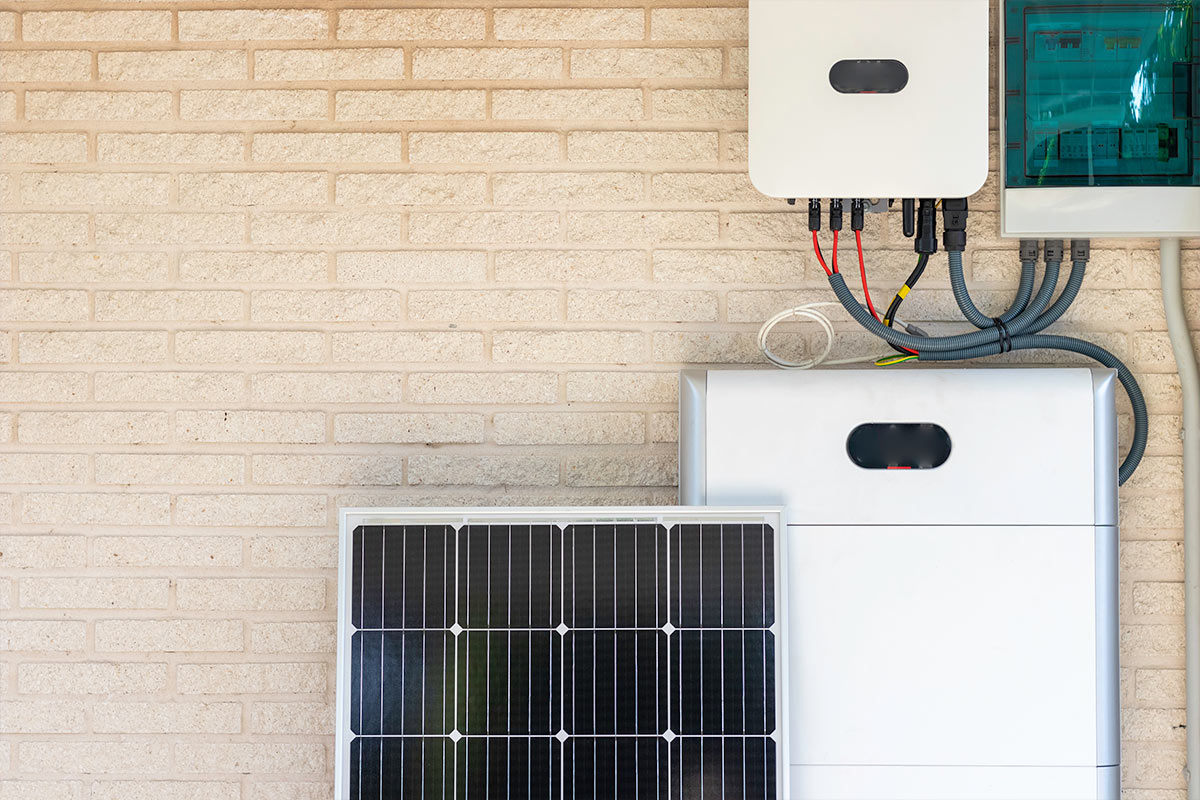
How Formbay connects retailers, installers, metering partners and verification services across the clean energy supply chain.
Retailers
Formbay helps solar and battery retailers deliver more installations
with less administration, lower compliance risk and faster access to
certificate revenue.
What we do
More installations, less admin
From the moment a job is sold through to certificate creation and
payment, Formbay provides the digital infrastructure that keeps
projects moving.
Our platform connects retailers, installers, warehouse teams and
compliance specialists in a single workflow, ensuring every
installation is properly documented, verified and ready for processing.
Formbay helps retailers:
Manage residential and commercial solar and battery installations.
Create and manage STCs, PRCs, VEECs and other environmental
certificates.
Capture installation evidence through the Formbay installer app.
Verify equipment, serial numbers and certificate eligibility.
Track the progress of every installation in real time.
Identify compliance issues before they delay certificate creation.
Reduce manual administration across installation and operations teams.
Access support from one of Australia’s most experienced certificate
operations teams.
Built to protect your business
Every installation passes through multiple layers of automated and
human verification before certificates are created. This helps
protect your business from avoidable compliance issues while reducing
the administrative burden on your team.
Whether you complete a handful of installations each week or thousands
each month, Formbay provides the technology, operational expertise and
scale to support your business as it grows.
Approximately one in every three residential solar and battery
installations completed in Australia is processed through Formbay.
For most solar and battery retailers, creating Small-scale Technology Certificates (STCs) can seem complicated. There are compliance requirements, technical standards, customer declarations, installation evidence, regulator rules and payment processes to manage.
Formbay simplifies this entire process.
As Australia’s leading REC Agent, we’ve built a digital platform that guides installers, retailers and compliance teams through every step required to create compliant STCs.
Step 1: The system is sold
Once a customer purchases a solar or battery system, the installation is scheduled. The retailer simply allocates the job to an accredited installer through Formbay.
Every project begins with a digital job record that follows the installation from start to finish.
Step 2: The installer captures evidence on-site
Using the Formbay Installer App, the installer completes the installation while collecting the evidence required under the Small-scale Renewable Energy Scheme.
This includes items such as:
Solar panel serial numbers
Inverter serial numbers
Battery serial numbers (where applicable)
Photos of the installation
Array layout
Switchboard photographs
Compliance labels
GPS location
Installer declaration
Customer signatures
Selfies and other required verification evidence
Rather than completing paperwork afterwards, evidence is captured digitally during the installation itself.
Step 3: Formbay validates the installation
Once submitted, Formbay begins automatically checking the installation.
Our platform validates:
Approved products
Manufacturer serial numbers
Installer accreditation
Electrical licence status
Product eligibility
Customer information
Required documentation
Compliance against regulator requirements
Many of these checks occur instantly, allowing potential issues to be identified before an STC application is lodged.
Step 4: Compliance specialists review the application
While technology performs thousands of automated checks, experienced compliance specialists also review installations where required.
This combination of automation and expert assessment helps ensure applications meet Clean Energy Regulator requirements while reducing delays caused by missing or incorrect information.
Step 5: STCs are created
Once the installation has passed compliance, Formbay creates the STCs and submits them through the REC Registry.
Depending on the retailer’s preferred trading method, certificates can either be:
Sold immediately,
Sold once approved, or
Sold when the retailer chooses.
Retailers always retain visibility over the status of every installation and every certificate.
Step 6: Payment is made
After STCs are sold, payment is made directly to the nominated party.
Formbay provides transparent pricing, digital approvals and complete visibility throughout the process.
Formbay provides transparent pricing, digital approvals and complete visibility throughout the process.
More than paperwork
Creating STCs is no longer just about completing forms.
Modern certificate creation involves product verification, digital evidence collection, automated compliance checking, fraud prevention, manufacturer validation, regulator submissions and certificate trading.
Formbay has spent more than a decade building technology that connects all of these steps into one seamless workflow.
For retailers, that means fewer compliance issues, faster processing, greater visibility and more time focused on growing the business rather than managing paperwork.
Australia’s transition to cleaner energy is supported by a range of government incentive programs that help reduce the upfront cost of solar, batteries and energy efficiency upgrades.
Each program has its own legislation, eligibility rules, compliance requirements and certificate creation process.
Formbay brings these schemes together into a single digital platform, allowing retailers and installers to access multiple incentives without managing multiple systems.
Small-scale technology certificates (STCs)
The Small-scale Renewable Energy Scheme (SRES) is Australia’s national solar incentive program.
Eligible rooftop solar, solar battery, and solar water heater systems can create Small-scale Technology Certificates (STCs), which have a market value that helps reduce the cost of installation for homes and businesses.
Formbay is Australia’s largest creator of STCs, processing hundreds of thousands of installations every year while managing the evidence, compliance and regulator submissions required by the Clean Energy Regulator.
Peak reduction certificates (PRCs)
The NSW Peak Demand Reduction Scheme rewards activities that reduce electricity demand during periods of high network usage.
For the solar and battery industry, this includes eligible battery installations and demand reduction activities that help improve the stability of the electricity grid.
Formbay provides retailers with an end-to-end platform for managing PDRS projects, collecting installation evidence and creating Peak Reduction Certificates (PRCs).
Victorian energy efficiency certificates (VEECs)
The Victorian Energy Upgrades program encourages households and businesses to install more energy-efficient technologies.
Eligible activities may generate VEECs, helping reduce the cost of approved upgrades while lowering energy consumption.
Formbay supports retailers participating in Victorian certificate markets through streamlined compliance and certificate creation workflows.
Energy savings certificates (ESCs)
The NSW Energy Savings Scheme rewards approved activities that improve energy efficiency.
Eligible upgrades can generate Energy Savings Certificates (ESCs), providing an additional financial incentive for businesses and households to adopt more efficient technologies.
Formbay manages the documentation, evidence collection and compliance required to create ESCs under approved activities.
Large-scale generation certificates (LGCs)
Large renewable energy projects, including commercial solar farms and other eligible renewable generators, may create Large-scale Generation Certificates (LGCs).
These certificates are generated based on renewable electricity production and form part of Australia’s Renewable Energy Target.
Formbay supports participants involved in large-scale certificate creation and ongoing certificate management.
One platform for every certificate market
Government incentive programs continue to evolve, with new technologies and new certificate schemes emerging across Australia and internationally.
Rather than managing multiple systems, retailers can use Formbay as a single platform to create certificates, collect evidence, manage compliance and track projects across multiple government programs.
Whether you’re processing solar, batteries, energy efficiency upgrades or renewable energy certificates, Formbay helps simplify the entire journey—from installation through to certificate creation and trading.
Getting started with Formbay is quick and straightforward. Once your account has been set up, you’ll have access to a complete platform for creating, managing and trading government energy subsidies.
Create your account
To register with Formbay, you’ll need:
A registered Australian business
A valid Australian Business Number (ABN)
To accept Formbay’s Terms and Conditions
A nominated Australian bank account for payments
It’s important that the information you provide is accurate and kept up to date, particularly your business and banking details, as these are used to process certificate payments.
Set up your team
Once your account is active, you can invite the people who will help manage your subsidy applications.
This may include:
Office administrators
Compliance staff
Solar installers
Electricians
Battery installers
Contractors
Other authorised team members
Your office staff can manage applications, respond to Requests for Information (RFIs) and work directly with Formbay’s compliance team, while installers can use the Formbay Installer App to collect the evidence required on-site.
Create, manage and trade from one platform
Everything happens within your Formbay Portal.
From creating applications and tracking their progress to managing compliance and trading certificates, your portal provides a complete view of your projects in one place.
When your certificates are ready to sell, you’ll be able to review the current trading price before confirming the transaction.
Selling your certificates
When you click Sell, you are confirming that you accept:
The displayed certificate price
Any applicable processing fees
The sale of the nominated certificates under Formbay’s trading terms
Once confirmed, your certificates are included in that day’s trading process.
After settlement, payment is processed and transferred to your nominated bank account.
Depending on your financial institution, funds will typically arrive later that day or within the following business day.
A payment record you can rely on
For more than 10 years, Formbay has maintained an exceptional payment record.
We have never missed a scheduled payment for a day’s certificate trading.
Our trading, settlement and payment systems are tightly managed and highly automated, giving retailers confidence that once a sale is completed, payment will be processed as expected.
Please note
Government subsidy programs rely on accurate information being collected and submitted.
Retailers are responsible for ensuring that the information supplied by their employees, installers and contractors is accurate and truthful.
If an installer or representative provides false, misleading or fraudulent information, and an application cannot be processed or certificates must be cancelled, Formbay reserves the right to recover any pre-payments or advances that have already been made in relation to that application, in accordance with our Terms and Conditions.
Helping your team collect accurate information from the outset protects your business, your customers and the integrity of Australia’s renewable energy subsidy programs.
How Formbay uses technology to improve compliance and protect your subsidy applications
Government subsidy programs rely on one thing above all else—accurate information.
Every solar or battery installation must be supported by evidence that demonstrates it meets the eligibility requirements of the relevant scheme. Missing information, incorrect product details or inaccurate installation records can delay applications, reduce payments or, in some cases, result in certificates being rejected altogether.
That’s why Formbay has spent more than a decade building technology designed to help retailers and installers collect the right information the first time.
Built around the installation process
Rather than asking installers to complete paperwork after they leave site, the Formbay Installer App guides them through the information required while they’re completing the installation.
The app prompts installers to capture the evidence required at each stage of the job, helping reduce the chance of important information being overlooked.
By collecting evidence during the installation, retailers spend less time chasing missing photographs, serial numbers and customer documentation.
Intelligent validation
As information is submitted, Formbay performs thousands of automated validation checks behind the scenes.
These checks help identify potential issues before applications are lodged, allowing many problems to be resolved early rather than after submission.
Depending on the program, these checks may include:
Product eligibility
Manufacturer model validation
Solar panel, inverter and battery serial number verification
Installer accreditation
Electrical licence verification
Customer information
Installation dates
Mandatory documentation
Required photographs and evidence
Application completeness
By identifying inconsistencies early, retailers can often correct issues before they become costly delays.
Verifying what was installed
Formbay also works closely with manufacturers and industry partners to improve confidence in product information.
Our technology helps verify that the equipment installed matches the products being claimed, reducing errors and supporting the integrity of subsidy programs.
As Australia’s renewable energy industry continues to evolve, these verification capabilities continue to expand across more products and technologies.
Supporting compliance—not replacing people
Technology is an important part of the process, but compliance still requires experience.
Where applications require additional review, Formbay’s compliance specialists work alongside our technology to assess evidence, investigate potential issues and help retailers resolve problems wherever possible.
This combination of automation and human expertise helps improve both efficiency and quality.
Protecting retailers and the industry
Accurate information benefits everyone.
It helps retailers receive their subsidy payments sooner, reduces the need for Requests for Information (RFIs), minimises costly return visits to site and provides greater confidence that applications comply with government requirements.
At the same time, stronger verification helps protect the integrity of Australia’s renewable energy incentive programs by reducing errors, identifying inconsistencies and supporting high standards across the industry.
Every improvement we make to the Formbay platform has the same goal: helping retailers create compliant subsidy applications with greater confidence, less administration and fewer costly surprises.
Formbay gives installers everything they need to complete compliant
solar and battery installations in the field, capture the required
evidence, and submit jobs with confidence.
What we do
For solar & battery installers
Designed specifically for Australian installers, the Formbay mobile app
guides users through every step of the installation process. From
serial number scanning and customer signatures to photos, system
configuration and compliance checks, Formbay makes it easy to get the
job right the first time.
With Formbay, installers can:
Create and complete installation jobs directly from their phone or tablet.
Scan solar panel, inverter and battery serial numbers.
Capture compliant photos and installation evidence.
Collect customer signatures and installer declarations digitally.
Complete STC, battery and state incentive documentation.
Receive instant validation of equipment and eligibility requirements.
Reduce paperwork and eliminate duplicate data entry.
Submit jobs faster and minimise costly compliance errors.
Track job status through to certificate creation.
Built for the real world
Whether you’re working on a residential rooftop, a commercial
installation or a battery retrofit, Formbay is designed for use in
the field. The app helps ensure every required photo, serial number,
document and declaration is captured before the job is submitted,
reducing callbacks and speeding up approvals.
More than 10,000 installers have used Formbay throughout their careers,
making it one of Australia’s most trusted field platforms for renewable
energy installations.
Around two out of every three Australian solar installers have used the
Formbay app to complete installations.
Formbay’s Serial Number Product Verification (SPV) platform helps
manufacturers protect their brands, improve product traceability and
ensure only genuine, eligible equipment is used to create environmental
certificates.
What we do
For manufacturers & serial number verification (SPV)
Working directly with manufacturers, Formbay maintains one of
Australia’s largest renewable energy equipment verification databases.
Installers scan serial numbers during installation, which are
automatically validated against manufacturer data in real time.
SPV helps manufacturers:
Verify genuine solar panels, inverters and battery products.
Detect invalid, duplicate or previously used serial numbers.
Reduce certificate fraud and counterfeit equipment risks.
Improve product traceability throughout the installation lifecycle.
Support installer compliance with Australian incentive programs.
Provide trusted product data directly to the industry.
Improve data quality across renewable energy installations.
Reduce manual serial number verification requests.
Trusted by the industry
Formbay works with manufacturers to securely manage and validate
millions of product serial numbers. Every verified scan strengthens
the integrity of Australia’s renewable energy certificate ecosystem
while giving installers and retailers confidence they are using
eligible equipment.
SPV integrates seamlessly with the Formbay platform, allowing serial
numbers to be scanned once in the field and automatically verified
during the installation workflow, eliminating manual lookups and
reducing compliance delays.
Formbay’s SPV platform has verified tens of millions of renewable energy
equipment serial numbers, making it one of Australia’s largest product
verification networks.
PRISM AI – visual intelligence and machine learning
Australia’s renewable energy industry is moving faster than ever. Solar
is being joined by batteries, new certificate schemes are emerging,
compliance requirements are becoming more sophisticated, and installers
are being asked to capture increasing amounts of evidence while they are
onsite.
What we do
PRISM AI: building intelligence into renewable energy compliance
For Formbay, the answer isn’t simply to add more people to check more
applications. It is to make the compliance process smarter.
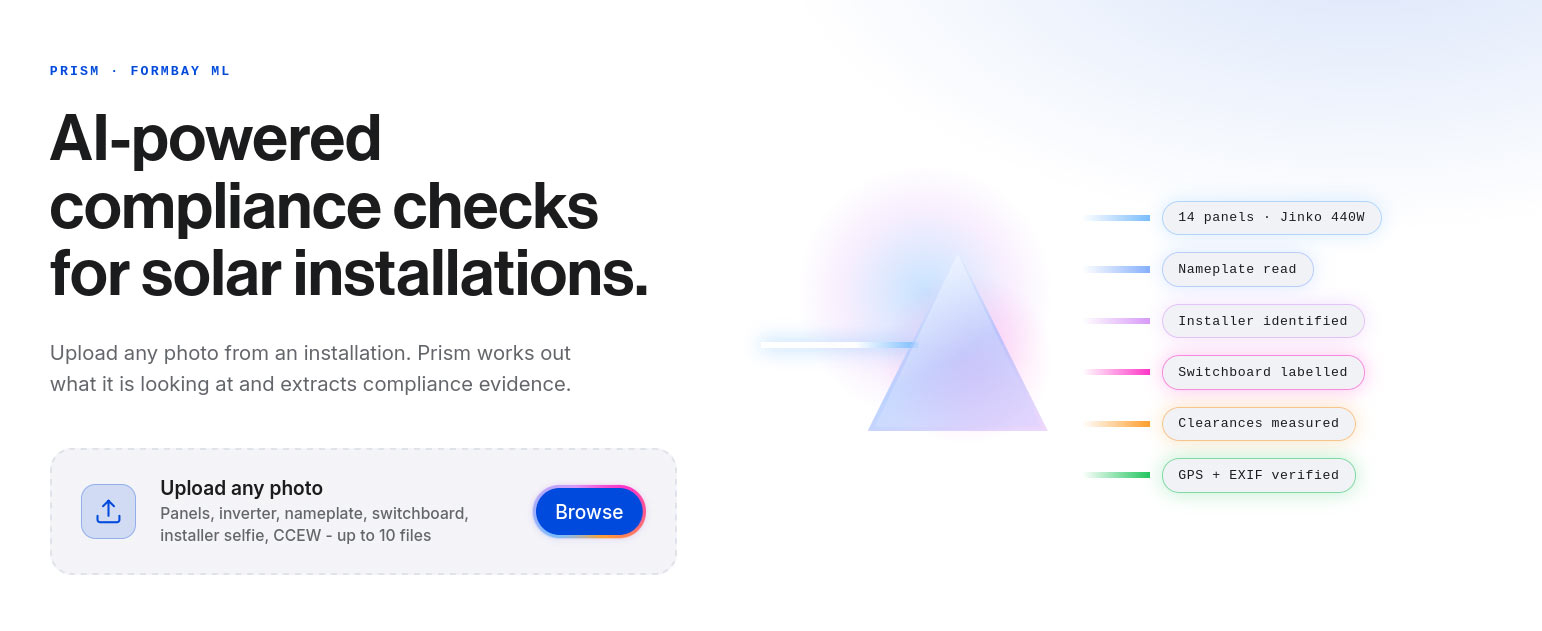
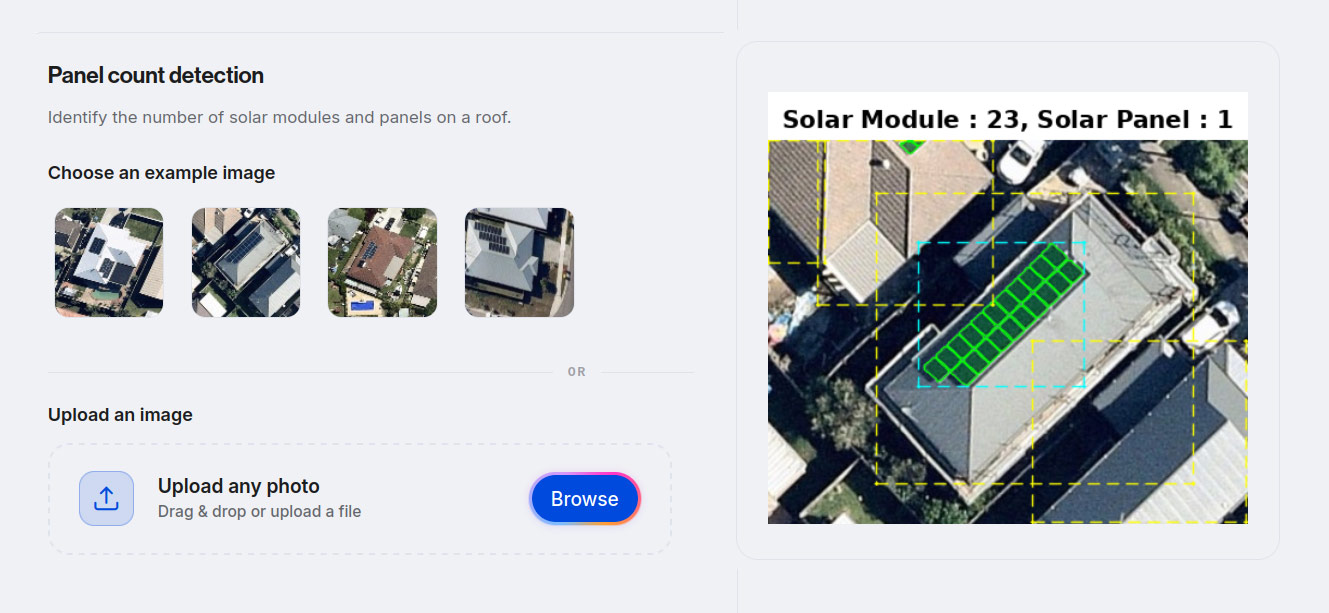
That is the thinking behind PRISM AI — Formbay’s
artificial intelligence and automated compliance engine, designed to
identify problems earlier, improve the quality of evidence and help
installers get applications right before they leave site.
From processing applications to preventing problems
For more than a decade, Formbay has operated at the centre of
Australia’s renewable energy certificate market. Our platform has now
supported more than one million installations and connects thousands of
retailers and installers across Australia.
That scale has given us something incredibly valuable: experience. We
understand the patterns that sit behind successful applications, the
mistakes that repeatedly create RFIs, the evidence regulators expect,
and the inconsistencies that can indicate something needs a closer look.
PRISM is about turning that experience into technology. Rather than
relying solely on compliance teams to identify problems after an
application has been submitted, PRISM analyses information as it moves
through the Formbay platform.
The objective is simple: find the problem as close as possible to the
moment it occurs.
Compliance while the installer is still onsite
One of the biggest opportunities for PRISM is at the point of
installation. Historically, an installer might complete a job, leave the
property and only discover later that a photograph was missing, a serial
number couldn’t be verified, information didn’t match, or additional
evidence was required.
That creates an RFI. The installer then needs to revisit information
from a job they completed days or weeks earlier — and in some cases may
need to return to the site.
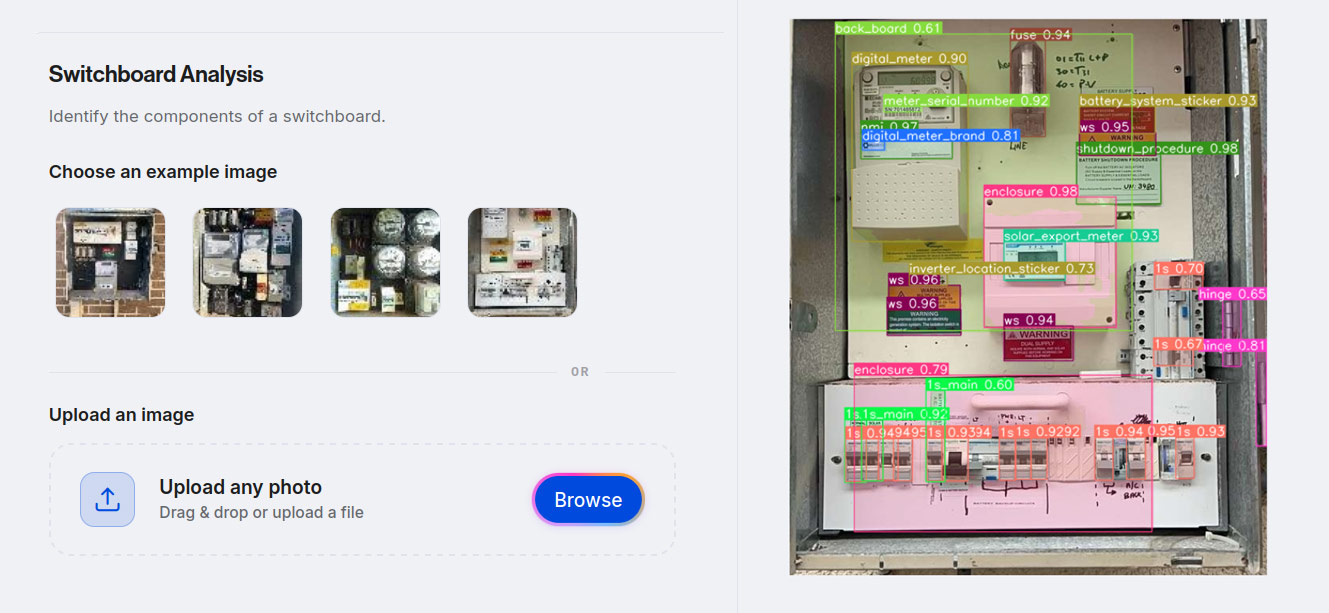
PRISM changes that workflow. As evidence is collected through Formbay,
PRISM can analyse the information and identify potential issues while
the installer is still onsite. That can include checking areas such as:
Installation photographs and required evidence
Equipment and serial-number information
Timestamps and installation dates
Installer declarations and signatures
Geolocation and onsite evidence
Inconsistencies between different pieces of application data
Missing or incomplete information
Scheme-specific compliance requirements
Where PRISM identifies an issue, the goal is not simply to reject the
application. It is to help resolve it. An installer can be directed to
recapture a photograph, rescan equipment, correct information, answer a
question or provide additional evidence while the information — and
ideally the installer — is still at the installation site. The corrected
evidence can then be analysed again.
Capture. Analyse. Correct. Revalidate.
That feedback loop is an important part of the future Formbay is
building.
AI with humans still in the loop
PRISM isn’t designed to replace Formbay’s compliance team. It is
designed to make them more effective. Straightforward checks can
increasingly be performed automatically, allowing experienced compliance
staff to concentrate on applications that genuinely require judgement,
investigation or regulatory expertise.
Where PRISM has sufficient confidence, an application can continue
through the workflow. Where something unusual is detected, it can be
escalated for human review. This creates a compliance model where
automation handles scale while people remain responsible for the
decisions that require expertise.
Learning from one of Australia’s largest renewable energy datasets
PRISM’s advantage isn’t simply access to artificial intelligence models.
Its advantage is the environment in which those models operate.
Formbay has spent more than a decade building workflows around renewable
energy installations and certificate creation. Today, the Formbay
network includes thousands of retailers and installers and processes a
significant share of Australia’s renewable energy certificate activity.
Every application contains structured information about equipment,
installers, retailers, properties, evidence, certificates and compliance
outcomes.
Used responsibly, that history provides an extraordinary foundation for
identifying patterns. PRISM can help Formbay understand not only whether
an individual field has been completed, but whether the entire
application makes sense when considered together.
That distinction is important.
Traditional validation asks
“Has the required information been supplied?”
Intelligent validation can increasingly ask
“Does the information supplied make sense?”
Moving from reactive to predictive compliance
The longer-term opportunity is to move compliance from a reactive
process to a predictive one. Instead of discovering issues during final
assessment, PRISM can progressively identify risk throughout the
lifecycle of an installation.
That could mean recognising unusual patterns across equipment,
installers, businesses, locations or evidence and directing additional
verification toward higher-risk applications. At the same time,
consistently high-quality applications can move through a more efficient
pathway. The result should be better compliance without unnecessarily
slowing down good installers.
Built for a changing energy market
Renewable energy compliance is no longer just about rooftop solar.
Formbay now operates across solar, batteries and multiple state and
federal certificate programs, with new technologies and methodologies
continuing to emerge.
PRISM is being designed as a common intelligence layer across those
programs. The underlying principle remains the same regardless of the
scheme: understand what evidence is required, capture it correctly,
validate it intelligently and maintain a complete audit trail.
That architecture also creates opportunities beyond Australia.
Compliance markets around the world differ in their methodologies and
regulations, but many share the same fundamental challenge: proving that
an activity happened, that it met the required standard and that the
evidence supporting it can be trusted.
Creating trust at scale
The energy transition will involve millions of individual installations
and an enormous volume of associated data. The industry cannot
sustainably manage that scale by simply adding more manual checking.
Technology needs to help establish trust.
That is ultimately what PRISM is being built to do. Not AI for the sake
of AI. Not automation for the sake of reducing people. But intelligent
technology that helps installers get things right, helps compliance
teams concentrate on genuine risk, helps retailers receive faster
outcomes and gives regulators greater confidence in the evidence
supporting certificate creation.
For Formbay, the next evolution of renewable energy compliance isn’t
simply processing applications faster. It’s preventing problems before
they become applications.
And that’s the future PRISM AI is being built for.
Smart metering companies
Formbay works with smart metering partners so retailers and installers can
coordinate meter upgrades and export activation within the same job workflow.
What we do
For smart metering companies
Formbay partners with smart metering providers to embed meter upgrade
workflows directly in the platform, reducing duplicate data entry and
improving site information before technician visits.
Retailers can initiate meter upgrade requests when creating installation jobs,
capture required site photos and details in one place, and share information
securely with metering partners without switching systems.